

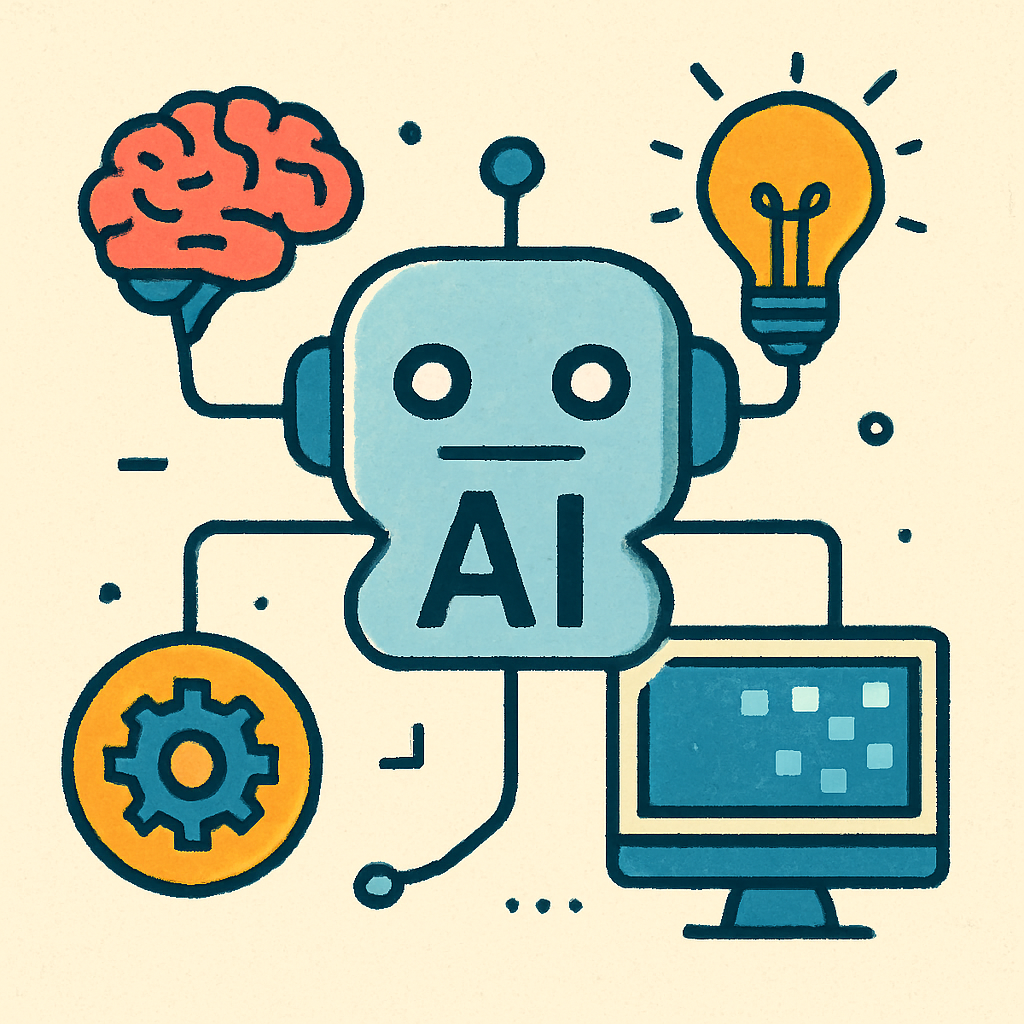
Artificial Intelligence (AI) refers to systems or machines that mimic human intelligence to perform tasks and can improve themselves based on the information they collect. Machine learning (ML) is a subset of AI that involves training a model using data to make predictions or decisions without being explicitly programmed to perform the task.
The Core Concepts of AI
AI encompasses a variety of technologies that enable machines to simulate human cognitive processes. This includes learning, reasoning, problem-solving, perception, and language understanding. Understanding these core concepts helps demystify AI, making it easier to comprehend its potential.
Machine Learning Techniques
Machine learning, a crucial component of AI, involves different methodologies such as supervised, unsupervised, and reinforcement learning. Supervised learning uses labeled data to train models, unsupervised learning finds hidden patterns in unlabeled data, and reinforcement learning focuses on decision-making by rewarding desired behaviors.
The Role of Data in AI
Data is the lifeblood of AI and machine learning. The quality and quantity of data directly impact the performance of AI systems. Data collection, processing, and analysis are foundational steps in creating robust AI models. The more diverse and comprehensive the data, the better the AI can learn and adapt.
Why AI Matters
AI is transforming industries by automating tasks, improving efficiency, and enabling new capabilities. From personal assistants like Siri and Alexa to advanced systems in healthcare and finance, AI is becoming an integral part of our lives.
Enhancing Efficiency
AI systems can process large volumes of data faster and more accurately than humans, leading to increased productivity and efficiency. In manufacturing, AI robots streamline production lines, while in logistics, AI optimizes supply chains and delivery routes.
Empowering Innovation
AI fosters innovation by creating possibilities that were previously unimaginable. In healthcare, AI assists in diagnosing diseases and personalizing treatment plans. In finance, AI predicts market trends and detects fraudulent activities, pushing the boundaries of what can be achieved.
Augmenting Human Capabilities
AI doesn’t just replace human tasks; it augments human capabilities. By handling repetitive and mundane tasks, AI frees humans to focus on creative and complex problem-solving. This synergy between AI and humans leads to enhanced decision-making and productivity.
Step 1: Define the Problem
The first step in building your own AI is to clearly define the problem you want to solve. Are you looking to create a chatbot, a recommendation system, or an image recognition tool? Understanding your goal will help guide your AI development process.
Identifying Your Objectives
Clearly articulating what you aim to achieve with AI is crucial. Whether you want to improve customer service, enhance product recommendations, or automate image tagging, having a specific objective sets the direction for your AI project.
Analyzing the Problem Scope
Understanding the scope of your problem helps in determining the complexity of the AI model you need. It involves assessing the scale, data requirements, and potential challenges you might face. A well-defined problem scope ensures you allocate resources efficiently.
Evaluating Feasibility
Not all problems are suited for AI solutions. Evaluating the feasibility of using AI involves considering factors such as data availability, technological constraints, and potential return on investment. This step ensures that you pursue AI projects with realistic expectations and achievable outcomes.
Example Problems
- Chatbot: Automate customer service responses.
- Recommendation System: Suggest products to users based on past behavior.
- Image Recognition: Identify objects or people in images.
Step 2: Gather and Prepare Data
Data is the backbone of any AI system. Without high-quality data, your AI won’t perform well. Collect data relevant to your problem and ensure it’s accurate and comprehensive.
Data Collection Strategies
Data collection involves gathering the necessary information from various sources such as databases, APIs, or direct user input. Identifying reliable data sources and understanding how to access this data is crucial for building a robust AI system.
Types of Data
- Structured Data: Organized data, often in tables (e.g., spreadsheets, databases). Structured data is easier to manage and analyze, making it the preferred choice for many AI applications.
- Unstructured Data: Data without a predefined format (e.g., images, videos, text). Unstructured data requires more preprocessing and complex algorithms to extract meaningful insights.
Ensuring Data Quality
High-quality data is essential for training effective AI models. This involves verifying data accuracy, consistency, and completeness. Regular data audits and validation processes help maintain data integrity and reliability.
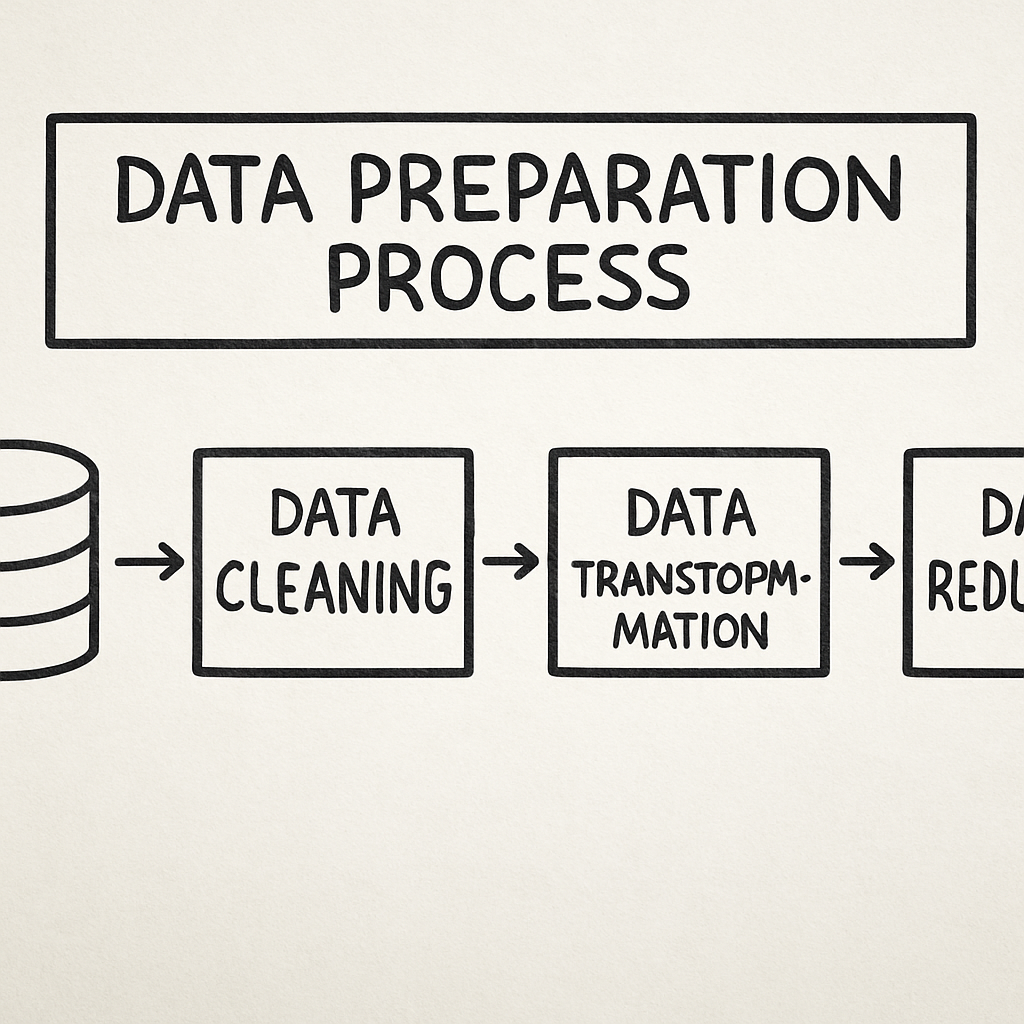
Data Cleaning
Clean your data by removing duplicates, correcting errors, and handling missing values. This step is crucial to ensure the quality of your AI model.
Removing Duplicates
Duplicate data can skew your AI model’s learning process, leading to inaccurate predictions. Identifying and removing duplicate entries ensures that your data represents unique instances, enhancing model performance.
Correcting Errors
Data errors, such as typos or incorrect entries, can mislead AI models. Implementing error-checking algorithms and manual reviews helps correct these inaccuracies, ensuring the data reflects true information.
Handling Missing Values
Missing data can hinder the learning process of AI models. Employing techniques such as imputation or data augmentation fills these gaps, enabling the model to learn effectively from complete datasets.
Step 3: Choose the Right Algorithm
Selecting the appropriate algorithm is critical for your AI’s success. Algorithms are sets of rules that help your AI learn from data and make decisions.
Understanding Algorithm Types
Different AI problems require different algorithmic approaches. Familiarizing yourself with various algorithm types, such as regression, classification, clustering, and deep learning, helps in selecting the most suitable one for your project.
Factors Influencing Algorithm Choice
Several factors influence the choice of algorithm, including the nature of the problem, data size, and computational resources available. Understanding these factors ensures you choose an algorithm that balances accuracy and efficiency.
Common Algorithms
- Linear Regression: Predicts a continuous outcome variable based on one or more predictor variables. It’s widely used for forecasting and trend analysis.
- Decision Trees: Uses a tree-like model of decisions and their possible consequences. Decision trees are intuitive and easy to interpret, making them popular for classification tasks.
- Neural Networks: Mimics the human brain to recognize patterns and classify data. Neural networks are powerful for handling complex, non-linear relationships in data.
Step 4: Train Your Model
Training involves feeding your algorithm with data so it can learn to make accurate predictions or decisions. This process can be time-consuming and requires computational resources.
Preparing Your Training Dataset
Preparing your training dataset involves selecting representative samples that reflect the problem you’re solving. This ensures your AI model learns from diverse scenarios and performs well in real-world applications.
The Training Process
- Split Data: Divide your data into training and testing sets. This separation allows you to train your model on one set while evaluating its performance on another.
- Model Training: Use the training set to teach your model. This involves adjusting the model’s parameters to minimize prediction errors and improve accuracy.
- Validation: Test your model with the testing set to evaluate its performance. Validation helps identify overfitting and ensures the model generalizes well to new data.
Overcoming Training Challenges
Training AI models presents challenges such as overfitting, underfitting, and computational limitations. Implementing techniques like regularization, data augmentation, and leveraging powerful computing resources helps overcome these obstacles.
Step 5: Evaluate and Optimize
Once your model is trained, it’s important to evaluate its performance and make improvements. Use metrics like accuracy, precision, and recall to measure your model’s effectiveness.
Evaluating Model Performance
Evaluating model performance involves using metrics that align with your problem’s objectives. These metrics provide insights into how well your model predicts outcomes and identifies areas for improvement.
Optimization Techniques
- Hyperparameter Tuning: Adjust the parameters that govern the learning process. Tuning hyperparameters helps enhance model performance by finding the optimal balance between bias and variance.
- Cross-Validation: Test your model on different subsets of data to ensure reliability. Cross-validation provides a robust assessment of model performance by reducing the risk of overfitting.
Iterative Improvement
AI model development is an iterative process. Regularly revisiting model performance and incorporating feedback from evaluations ensures continuous improvement and adaptation to changing data patterns.
Step 6: Deploy Your AI Model
After successful training and evaluation, it’s time to deploy your AI model so it can be used in real-world applications.
Preparing for Deployment
Preparing for deployment involves ensuring your AI model is ready for real-world use. This includes validating its performance, addressing security concerns, and establishing monitoring mechanisms.
Deployment Methods
- Cloud Services: Use platforms like AWS, Google Cloud, or Azure to deploy your model. Cloud services offer scalability, flexibility, and ease of integration with existing systems.
- Local Deployment: Run your model on local servers or devices. Local deployment is suitable for applications requiring low latency or operating in environments with limited internet connectivity.
Ensuring Scalability
Scalability is crucial for AI models to handle varying loads and user demands. Implementing efficient resource allocation and load balancing strategies ensures your model can scale seamlessly as usage grows.
Step 7: Monitor and Maintain
AI models can degrade over time as new data becomes available. Regularly monitor your model’s performance and update it as needed to ensure it continues to meet your objectives.
Continuous Monitoring
Continuous monitoring involves tracking model performance metrics and identifying anomalies or drifts. This proactive approach helps detect issues early and maintain model accuracy.
Implementing Feedback Loops
Feedback loops enable your AI model to learn from new data and adapt to changing conditions. Incorporating user feedback and retraining the model with updated data ensures ongoing relevance and effectiveness.
Ensuring Long-term Maintenance
AI models require long-term maintenance to remain effective. This includes updating algorithms, retraining models with new data, and addressing emerging security threats to ensure sustained performance.
Conclusion
Building your own AI is a rewarding journey that involves defining a problem, gathering data, choosing the right algorithm, training and optimizing your model, and finally deploying it for use. By following these essential steps, you can create AI systems that enhance productivity, improve decision-making, and unlock new opportunities. Embrace the power of AI and start transforming your ideas into reality today.
The Future of AI
The future of AI is bright, with endless possibilities for innovation and transformation across industries. As technology advances, AI will continue to evolve, offering new solutions to complex challenges and reshaping the way we live and work. Embrace this exciting journey and become a pioneer in the AI-driven world.
